A foreigner can buy property in Greece in about 6–10 weeks, and most of it can be done remotely. There is no residency requirement and no restriction on foreign ownership across most of the country. The essential path is: get a Greek tax number (AFM), appoint an independent lawyer, run title due diligence, sign a preliminary contract with a 10% deposit, pay the transfer tax, and sign the notarial deed — which is then registered. Here is the process, step by step.
Can a foreigner buy property in Greece?
Yes. Non-residents can own property in Greece, EU and non-EU alike, across most of the country. You do not need to be a resident, and no visa is required simply to buy — though you will need to be in Greece at some point for identity verification if you also apply for Golden Visa residency. The one universal prerequisite is a Greek tax number.
Step 1 — Get your AFM (tax number)
The AFM is your Greek tax identification number, and you cannot complete a purchase without it. Your lawyer or accountant applies for it at the tax office (DOY), and the process can often be handled remotely through the myAADE platform. Non-EU buyers typically also appoint a local tax representative.
Step 2 — Appoint an independent lawyer
Hire a Greek lawyer who works exclusively for you — not one shared with the seller. Foreign buyers frequently grant a Power of Attorney, drafted by a Greek notary or at a Greek consulate, so the lawyer can act on their behalf and the purchase can proceed without repeated travel. This single step is what makes a remote purchase practical.
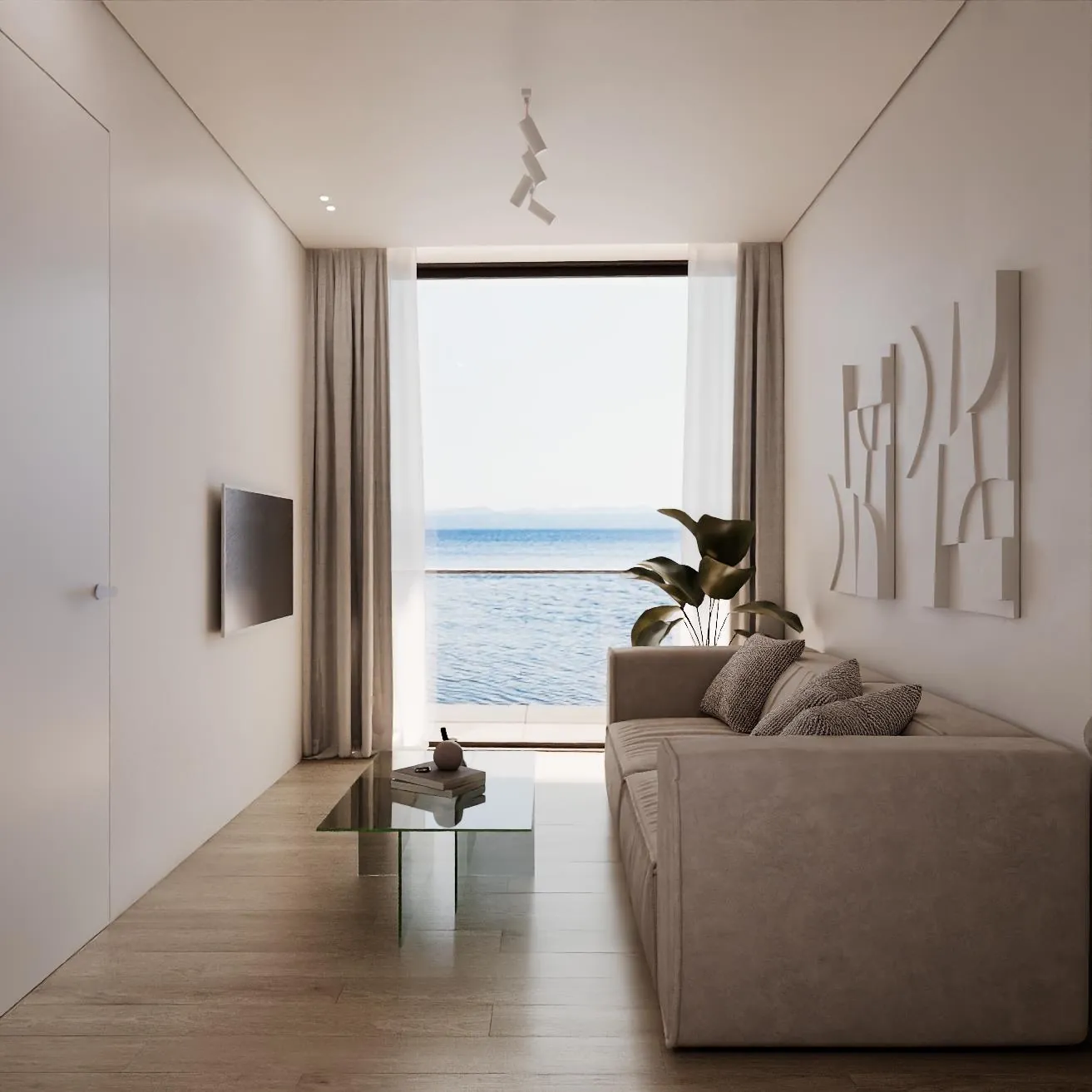
Buying at MARĒ. Because MARĒ is a new development from a single developer, the title and permit position is clean and straightforward — there is no tangled ownership history to unwind. The team can point you toward the right independent professionals. Get in touch.
Step 3 — Open a Greek bank account
You will generally need a Greek bank account for the transaction and for ongoing costs. Banks typically ask for your passport, AFM, proof of residence and proof of income. Your lawyer can help arrange this alongside the AFM.
Step 4 — Due diligence on the property
Your lawyer conducts a title search at the Land Registry or Cadastre: verifying ownership history, checking for encumbrances or debts, and confirming building-permit compliance. For older properties an engineer often checks boundaries and building legality too. For a new build the file is simpler, but the due diligence step is never skipped.
One national quirk: the Greek Cadastre is still being rolled out, so some older properties remain in legacy land registries, which can complicate verification. A modern development avoids most of that friction.
Step 5 — Preliminary contract and deposit
Once due diligence is clear, you sign a preliminary (promissory) agreement and pay a deposit — commonly 10% — to secure the property. This commits both sides while the final paperwork is prepared.
Step 6 — Pay the transfer tax
Before the deed can be signed, the transfer-tax declaration is submitted and the tax paid — 3.09% of the taxable value. For a new-build within Greece’s VAT suspension (in force through 31 December 2026), this transfer tax applies instead of 24% VAT. Your lawyer and notary handle the filing through the AADE systems.
Step 7 — Sign the notarial deed
The purchase is formalised in a notarial deed, signed in front of a Greek notary (or by your lawyer under Power of Attorney). The notary drafts the deed, verifies the property’s legal status and oversees the transfer. This is the moment ownership passes.
Step 8 — Register the deed
Finally, the signed deed is registered with the Land Registry or Cadastre, completing your legal ownership. Your lawyer confirms registration and provides the final documentation.
How long does it take?
For a property in an unrestricted area with a clean file, the whole process typically runs 6 to 10 weeks from engagement to registration. It can be shorter for a straightforward new-build purchase where the developer’s paperwork is already in order. (Non-EU buyers purchasing in designated border areas can face a longer committee-approval timeline — not a factor for a standard residential purchase in Eretria.)
What will it cost on top of the price?
Budget roughly 5–8% above the purchase price for a clean new-build file: the 3.09% transfer tax plus notary, land-registry and legal fees. There is no foreign-buyer surcharge — you pay the same as a Greek national.
The bottom line
Buying in Greece as a foreigner is a defined, professional process rather than a leap of faith. Get your AFM, appoint an independent lawyer, let them run due diligence and act under Power of Attorney, and a purchase — including a remote one — completes in a couple of months. A new development like MARĒ removes much of the title complexity that slows older purchases down.
Frequently asked questions
Can I buy property in Greece without living there?
Yes. There is no residency requirement to buy, and most of the process can be handled remotely if you grant your lawyer a Power of Attorney. You will need a Greek tax number (AFM) first.
What is the first step?
Obtaining your AFM (Greek tax number). Your lawyer or accountant arranges it, often remotely via myAADE. You cannot complete a purchase without it.
Do I need a Greek lawyer?
Strongly recommended. An independent lawyer working only for you conducts title due diligence, checks for debts and permit compliance, and can act under Power of Attorney so you need not travel repeatedly.
How long does buying take?
Typically 6–10 weeks from engagement to registration for a clean file in an unrestricted area, and often faster for a straightforward new-build purchase.
Are there extra taxes for foreign buyers?
No. Foreigners pay the same 3.09% transfer tax and the same ongoing taxes as Greek nationals. There is no foreign-buyer surcharge or ownership restriction across most of Greece.
This guide is general information, not legal or tax advice. Procedures, timelines and the VAT suspension can change. Appoint a qualified Greek lawyer and accountant to handle your specific purchase.