A well-managed short-term rental in Eretria can realistically target a gross rental yield in the region of 5–8% per year, driven by an unusually long 10-month letting season and strong domestic and international demand. The exact figure depends on the unit, the nightly rate achieved, and how professionally the property is run — but Evia’s dual-season appeal gives it a structural advantage over islands that effectively close for half the year.
Below we break down where that number comes from, what actually drives yield in Eretria, and how MARĒ is built to sit at the upper end of the range.
What rental yield can you realistically expect in Eretria?
Rental yield is annual rental income divided by the property’s purchase price. For Greek coastal property, published market data offers useful reference points:
- Athens city-centre apartments are widely reported at 5–7% gross yields in 2026.
- Coastal and island short-term rentals vary far more, because income is concentrated into a season — a strong summer can push gross yields higher, but a short season caps the annual total.
- Entry prices in Eretria remain comparatively low: apartments on the open market currently list roughly from €70,000 for a small unit to €350,000+ for larger sea-view homes, well below Cyclades pricing of €4,000/m² and up.
The lower entry price is half the yield equation. A property that costs less but rents for a comparable nightly rate produces a higher percentage return. Eretria’s combination of accessible pricing and a genuinely long season is what makes mid-to-high single-digit gross yields achievable.
MARĒ owners — verified figures. The ranges above are drawn from public market data for Greek coastal property. Astrea’s management arm will publish MARĒ’s own occupancy, average daily rate (ADR) and net yield figures for managed units. Those project-specific numbers replace the estimates here — contact the team for the current data pack.
Why does Eretria’s season last longer than the islands’?
This is the single biggest driver of annual yield, and it is where Eretria structurally beats the Cyclades. Remote islands generate almost all their income across roughly four peak months. When the ferries thin out in late September, occupancy collapses.
Eretria does not have that problem, for one reason: it is connected to the mainland. It sits a 45-minute drive from Athens and Athens International Airport via the Chalkida bridge, and a 20-minute ferry from Oropos. That accessibility keeps demand alive well beyond summer:
- Spring and autumn: weekend visitors from Athens, drawn by the beaches without the island logistics.
- Winter: the alpine landscapes and ski slopes of nearby Mount Dirfi pull a completely different visitor — someone who wants a beach walk in the morning and the mountains in the afternoon.
The practical result is an extended 10-month rental season, which spreads income across far more of the year than an island property can, and cushions the annual return against a weak summer.
Can you still legally run a short-term rental in Eretria in 2026?
Yes — and this matters more in 2026 than ever. Greece has tightened its short-term rental framework significantly, but the restrictions are geographically targeted. Freezes on new registrations apply to saturated central districts of Athens and Thessaloniki. They do not apply to islands, coastal areas, or smaller towns — Eretria included.
What every Eretria owner does need to do is operate compliantly under the national framework: register for an AMA (Property Registry Number) with the Greek tax authority (AADE), display it on every listing, and meet the safety and insurance standards introduced by Law 5170/2025. Short-term rental income is taxed under the Greek property-income brackets, and platforms such as Airbnb and Booking.com now report earnings directly to AADE.
None of that blocks letting in Eretria — it simply means the property must be run properly. This is precisely where professional management earns its fee. For the full picture, see our guide to Greek short-term rental rules in 2026.
What actually maximises the yield on a MARĒ apartment?
Two identical apartments can produce very different returns depending on how they are run. The levers that matter most:
- Dynamic pricing. Nightly rates adjusted in real time to demand — weekends, holidays, local events — rather than a flat annual rate, materially lifts revenue over a season.
- Occupancy management. Filling shoulder-season nights (that long Eretria season again) is where the extra percentage points of annual yield are won or lost.
- Guest experience. Hotel-standard cleaning, fast check-in, and concierge touches drive 5-star reviews, which drive search ranking on the platforms, which drives more bookings at better rates.
- Cost control. Yield is a net figure. Efficient maintenance and transparent expense reporting protect the return.
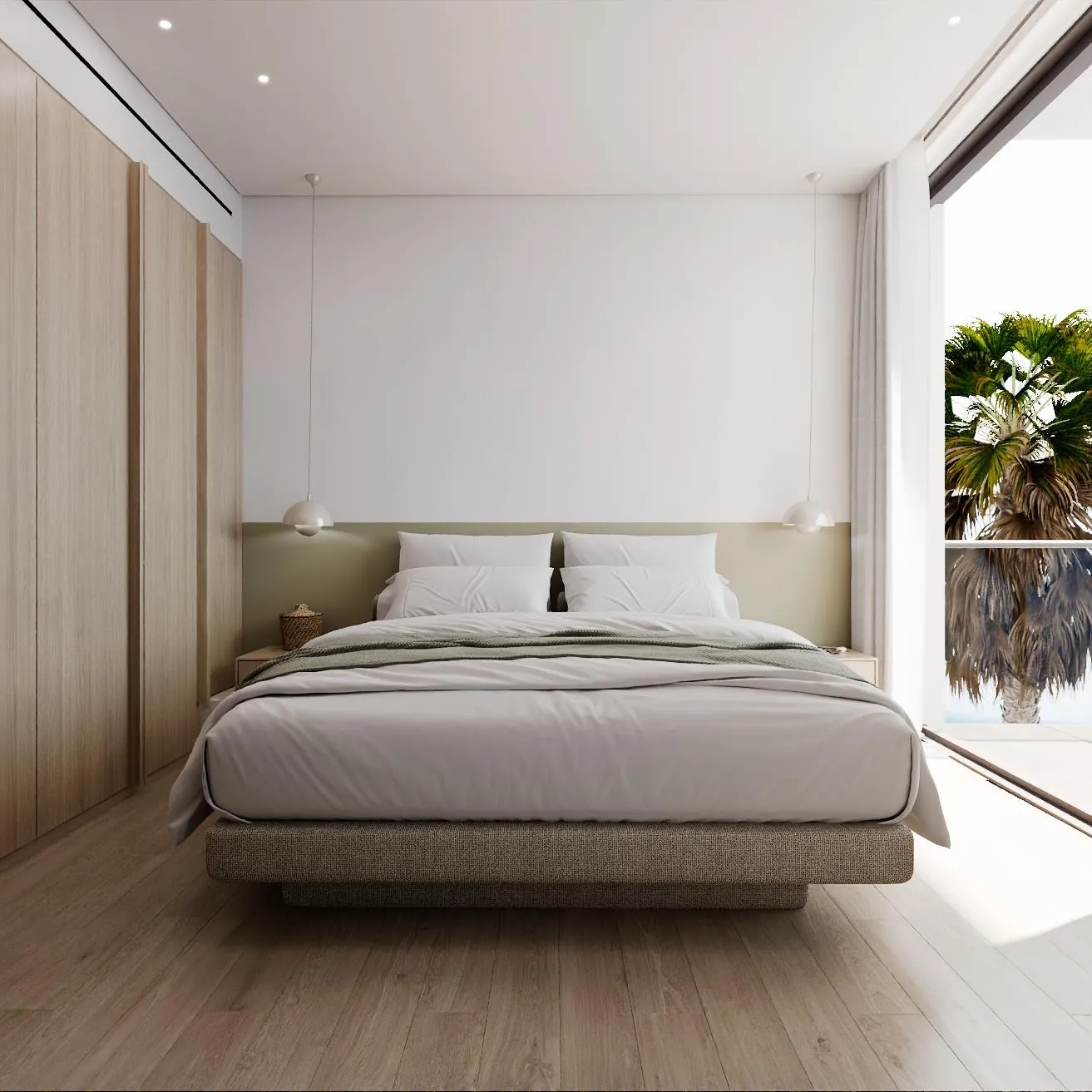
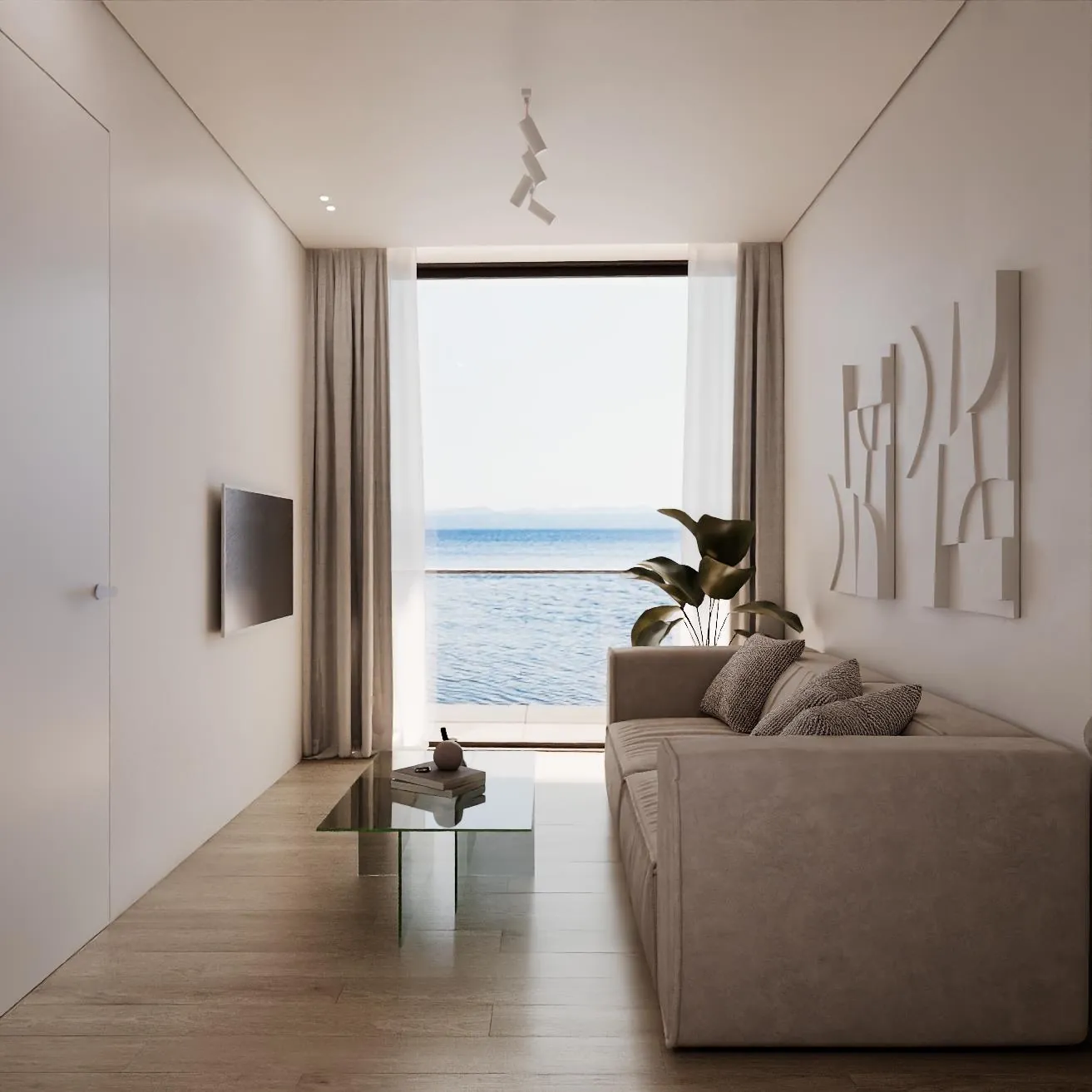
MARĒ is designed as a managed asset rather than a bare apartment. The in-house management team provides a full “hands-free” envelope — dynamic pricing, hotel-level operations, a digital owner’s portal with monthly income and occupancy reporting, and premium concierge — so an overseas owner can hold a performing rental without running it day to day. You can see how the residences are built for this on the project page.
Gross yield vs net yield: what’s the difference?
It is worth being precise, because the two numbers are often confused and the gap between them decides whether an investment actually performs.
- Gross yield is annual rental income divided by purchase price, before any costs. It is the headline figure most listings quote — the 5–8% range discussed above.
- Net yield is what you keep after running costs: management fees, cleaning, maintenance, utilities, insurance, the AMA compliance overhead, property tax (ENFIA) and income tax.
For a professionally managed short-term rental, running costs and management typically absorb a meaningful slice of gross income, so net yield lands below the gross figure. That is not a weakness of the model — it reflects the fact that someone is doing the work of turning a property into a performing hospitality asset. The relevant question for an overseas owner is not “how do I avoid the management fee” but “does professional management lift gross revenue by more than it costs?” In a market like Eretria, where dynamic pricing and shoulder-season occupancy are the difference between an average and an excellent year, the answer is usually yes.
When you request MARĒ’s figures, ask for both gross and projected net, and the assumptions behind them — occupancy rate, average daily rate, and the cost stack. A credible operator will show all three.
How does Eretria compare with buying on a traditional island?
For an investor focused on return rather than postcard prestige, the comparison is favourable:
- Lower entry price than the Cyclades means a higher yield percentage for a comparable nightly rate.
- Longer season means more income-generating nights per year.
- Clean STR legality means none of the registration uncertainty now affecting central Athens.
- Genuine accessibility reduces both guest friction and owner management cost.
The trade-off is honest: the Cyclades command higher peak nightly rates and stronger global brand recognition. If your priority is a trophy asset on Santorini, Eretria is not that. If your priority is a resilient, well-utilised rental that earns across most of the year at a sensible entry price, Evia’s numbers are hard to argue with. We compare the three directly in our guide to Evia vs Crete vs the Cyclades.
The bottom line
A realistic planning range for a well-run Eretria short-term rental is roughly 5–8% gross yield, with the long season and low entry price doing the heavy lifting. MARĒ is engineered to reach the upper part of that band through professional management and a dual-season location — and Astrea can share the project’s own verified occupancy and yield figures directly. Request the current data pack to see the real numbers for your target unit.
Frequently asked questions
What is a good rental yield for property in Greece?
For Greek residential property, a gross yield of 5–7% is generally considered strong, with Athens city-centre apartments typically in that range in 2026. Well-run coastal short-term rentals with a long season, like Eretria, can target the upper end of that band.
Is Eretria affected by Greece’s 2026 Airbnb restrictions?
No. The 2026 registration freezes apply to saturated central districts of Athens and Thessaloniki. Islands, coastal areas and smaller towns such as Eretria remain able to register new short-term rentals under the national framework, provided the property holds a valid AMA number and meets Law 5170/2025 safety standards.
How long is the rental season in Eretria?
Eretria supports an extended season of roughly 10 months, considerably longer than remote islands that generate income mainly across four summer months. Its mainland connection sustains spring and autumn weekend demand from Athens, while nearby Mount Dirfi adds winter visitors.
Do I have to manage the rental myself?
No. MARĒ includes a professional management service covering dynamic pricing, guest check-in and cleaning, maintenance, monthly owner reporting and concierge — designed so overseas owners can hold a performing rental without day-to-day involvement.
What taxes apply to short-term rental income in Greece?
Short-term rental income is taxed under Greece’s property-income brackets, and booking platforms report earnings to the tax authority (AADE). Owners must register for an AMA number and comply with national safety and insurance rules. Consult a Greek tax adviser for figures specific to your situation.
This guide is general information, not investment, legal or tax advice. Market ranges are drawn from public 2026 data and vary by property. MARĒ-specific figures are provided by Astrea on request. Greek tax and short-term-rental rules can change — verify current rules with a qualified Greek adviser before investing.